






A toaster is a small object, but it sits out on the counter every day. The shape, color, and materials all affect how the kitchen feels when you walk in for morning coffee.
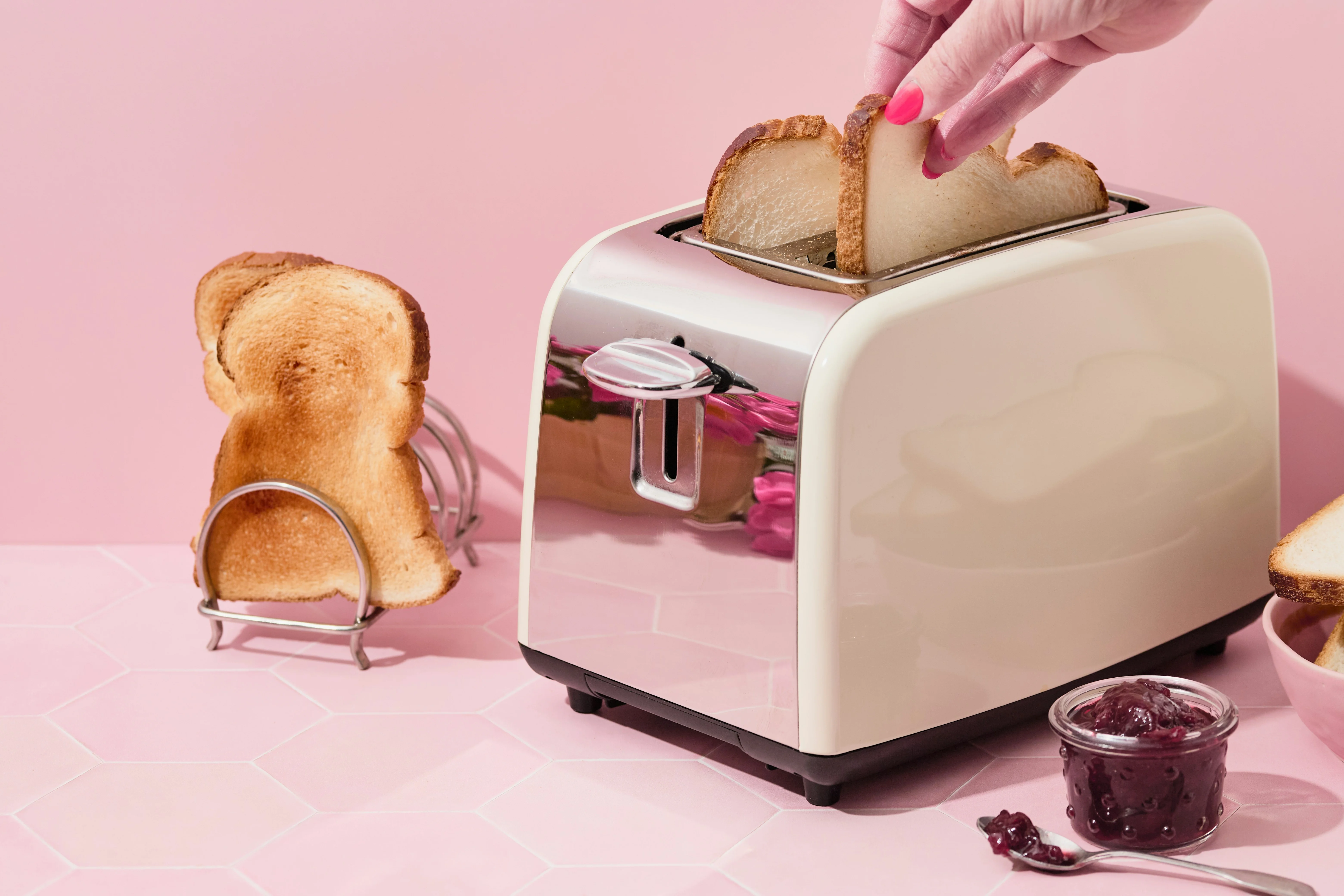
The appeal of a retro toaster is not just about looks. Many people associate these designs with a time when appliances felt heavier, more mechanical, and more durable. The rounded corners, chrome accents, and simple levers suggest an era when the kitchen was becoming modern, but still felt warm and human.
Retro toasters today fall into two broad categories. Some are true vintage machines from the middle of the twentieth century. Others are modern appliances designed to look like they came from that period. Understanding the difference helps you choose a toaster that fits both your kitchen and your daily routine.
This guide explains the major retro toaster styles, how the designs changed over time, and what actually matters when you want one that works well.
What Makes a Toaster Look Retro
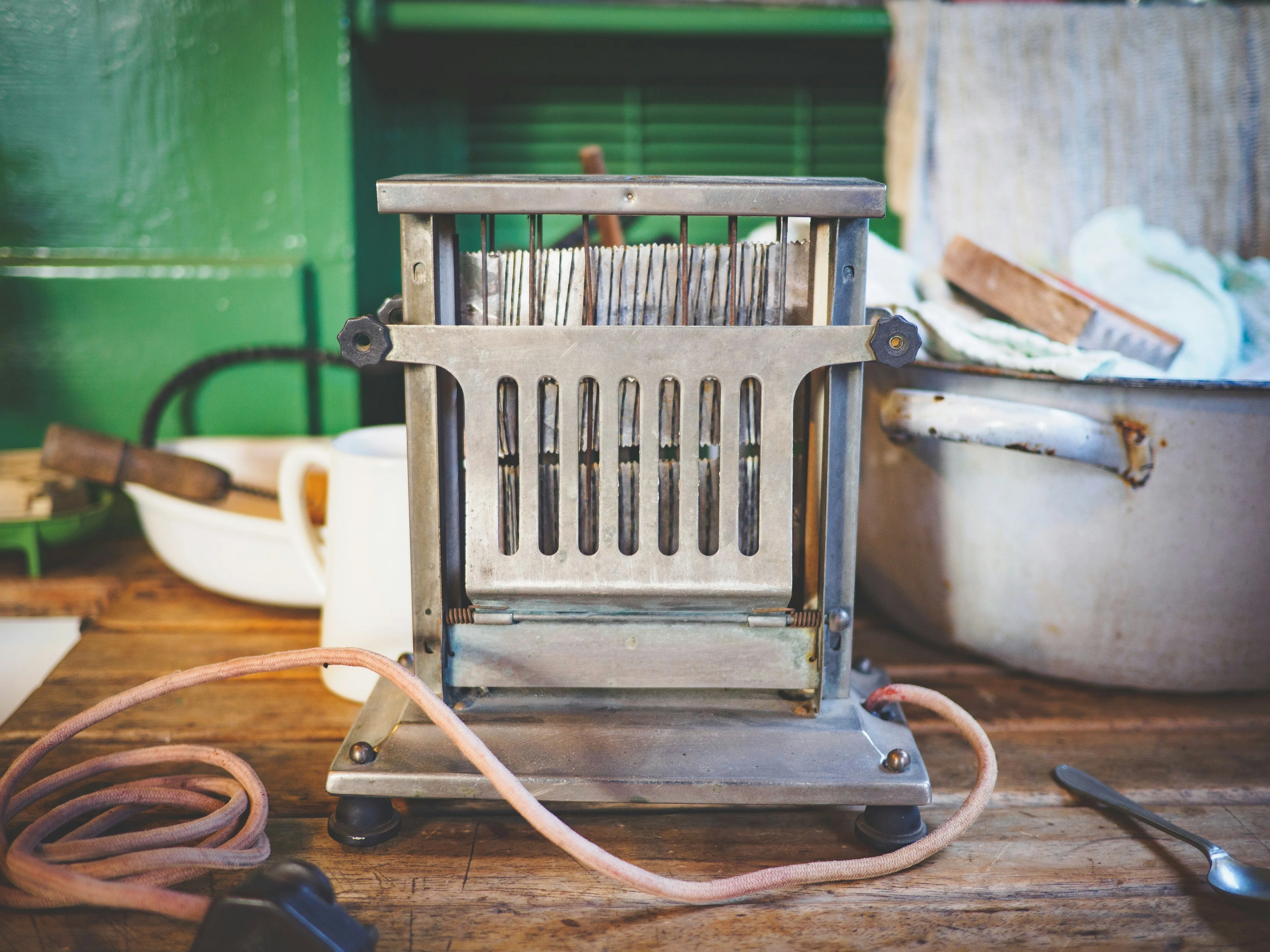
A retro toaster usually borrows its visual language from the 1930s through the 1960s. That period saw enormous changes in kitchen design, and small appliances followed the same trends as cars, radios, and furniture.
One of the biggest visual clues is the shape. Retro toasters tend to have rounded corners, curved sides, or gently domed tops. They rarely look boxy or purely rectangular. Even the more angular designs from the early twentieth century often had stepped or tiered details that gave them a sense of movement.
Materials also play a major role. Chrome, polished steel, enamel, and Bakelite were common in mid century appliances. These materials reflect light and feel solid in the hand. Even when the toaster was affordable, it still had some weight to it.
Color is another strong indicator. Early models were often plain chrome or white and chrome combinations. By the 1950s and 1960s, pastel shades and bright colors became popular. Turquoise, red, pink, and soft yellow all appeared in kitchens that embraced modern design.
When you see a toaster with curved lines, a glossy finish, and a cheerful color palette, it is usually trying to capture that mid century look.
How Retro Toaster Styles Changed Over Time
1930s and early 1940s: Art Deco influence
The earliest retro style toasters were shaped by Art Deco design. These models often had geometric bodies, stepped edges, and strong vertical or horizontal lines.
They were usually finished in chrome or brushed metal. Decoration came from the shape itself rather than bright colors. Some featured sunburst patterns or ridged sides that echoed the architecture and furniture of the time.
These toasters often looked more like small machines than decorative objects. They felt serious, precise, and slightly industrial.
Late 1940s and 1950s: Streamlined and domestic
After the war, kitchen design became softer and more optimistic. Toasters from this period started to use rounded corners, smooth surfaces, and more compact shapes.
This was also the era when bright colors became common. Manufacturers began offering toasters that matched pastel refrigerators and mixers. The kitchen was no longer hidden away. It became a social space, and appliances were expected to look cheerful.
Many classic chrome pop up toasters come from this period. They often feature a simple lever, a browning dial, and very little decoration beyond the shine of the metal.
1960s: Space age touches
By the 1960s, some toasters began to reflect the space age design trends of the time. Shapes became sleeker, and some models had slightly more dramatic curves or sculpted forms.
Colors became bolder. Bright red, deep blue, and high contrast combinations appeared alongside the softer pastels of the previous decade.
These toasters still kept the basic pop up format, but the styling hinted at rockets, speed, and futuristic living.
True Vintage Toasters Versus Modern Retro Inspired Ones
True vintage machines
A true vintage retro toaster was built between roughly the 1930s and the 1960s. These appliances were made mostly from metal, with Bakelite knobs or handles.
They were designed to last. The bodies were stamped from heavy gauge steel or aluminum, then plated or painted. Inside, the heating elements were usually made from nichrome wire, a material that resists heat and corrosion.
Many of these toasters still work today, which says a lot about their construction. However, using a vintage toaster comes with some considerations.
Older cords may need replacement for safety. Some models lack modern features like crumb trays or automatic shutoff. They can also run hotter than modern appliances.
Collectors often buy them for display, while others have them professionally restored for daily use.
Modern retro inspired toasters
Modern retro toasters are new appliances designed to look old. They often borrow the rounded shapes and bright colors of the 1950s.
Inside, though, they are built more like contemporary appliances. Plastic is more common. Electronic controls may replace purely mechanical parts. The weight is usually lighter.
The advantage is convenience. You get modern safety features, easily replaceable parts, and reliable performance.
The downside is that some cheaper models only imitate the look. Thin plastic bodies and weak heating elements can make them feel more like toys than serious kitchen tools.
If you want the retro appearance without the complications of vintage wiring or maintenance, a good quality modern retro toaster is often the most practical choice.
Common Retro Toaster Types
Two slice pop up toasters
This is the classic retro toaster format. Two vertical slots, a single lever, and a browning control dial.
Most mid century homes had something like this on the counter. They were affordable, compact, and easy to use. You plug it in, drop in the bread, push the lever, and wait for the toast to pop up.
These models remain the most practical for everyday use, especially in smaller kitchens.
Automatic or thermostat controlled toasters
Some higher end vintage models used automatic systems that sensed the temperature of the bread. The famous Sunbeam Radiant Control toasters worked this way.
Instead of a manual lever, the toaster would lower the bread itself and adjust the heat based on moisture levels. The idea was perfectly toasted bread every time.
These models are highly collectible today and often sell for much more than basic toasters, especially when restored.
Specialty and novelty models
Over the years, companies experimented with unusual designs. Some toasters were built into small tables. Others were decorated with porcelain bodies or unusual patterns.
These are less common and often more expensive. They are usually collected as design objects rather than used for everyday breakfast.
What Actually Makes a Good Toaster
Even heating
The most important quality in any toaster is even heat distribution. Good toasters brown bread consistently across the surface rather than leaving pale edges and burnt centers.
Heavier metal bodies often help with this because they retain and distribute heat more evenly.
Reliable browning control
A useful toaster gives you predictable results. The browning dial should produce clear differences between settings.
On many cheap models, the dial feels vague and the results are inconsistent. A better toaster produces similar toast each time you use the same setting.
Sturdy construction
A retro toaster should feel solid when you touch it. The lever should move smoothly. The body should not flex or rattle.
In vintage models, this usually means heavy metal construction. In modern retro models, it often means thicker materials and better internal components.
Simple maintenance
A crumb tray makes a big difference. Earlier toasters sometimes lacked them, which made cleaning more difficult.
Modern retro toasters almost always include a removable tray. This small feature keeps the toaster cleaner and reduces the risk of burnt crumbs affecting the flavor.
Where Retro Toasters Were Sold and Used
During the mid twentieth century, toasters were sold through department stores, hardware shops, and mail order catalogs. Companies like Sears, Montgomery Ward, and JCPenney carried them as standard household items.
They were not luxury goods. Most families had one on the kitchen counter, usually near the stove or breakfast area.
In everyday life, the toaster was part of the morning routine. It was used by whoever prepared breakfast, and eventually by children and teenagers making their own toast before school.
Advertisements focused on convenience and reliability. The promise was simple. Perfect toast without effort.
How to Choose the Right Retro Toaster for Your Kitchen
Start by deciding whether you want a true vintage piece or a modern retro inspired model. Vintage machines offer authenticity and heavier construction, but they may require restoration.
Modern retro toasters are easier to use and maintain. They usually have safer wiring, crumb trays, and more predictable performance.
Next, consider size and capacity. A two slice toaster works well for most households. Larger four slice models are useful for families or frequent entertaining, but they take up more counter space.
Color and finish should match the mood of your kitchen. Chrome feels classic and neutral. Pastel colors create a softer, cheerful look. Bright primary colors add energy.
Finally, focus on performance. Read reviews, check the weight and materials, and look for models known for even toasting.
Why Retro Toasters Still Work
A retro toaster is one of the simplest ways to bring character into a kitchen. It sits in plain view, used every day, quietly shaping the atmosphere of the room.
Whether you choose a restored chrome model from the 1950s or a modern pastel reissue, the right toaster does more than brown bread. It adds a small note of warmth and personality to the morning routine.
In many homes, the best appliances are not the most advanced or complicated. They are the ones that feel pleasant to use and look at, day after day, without asking for much attention. A good retro toaster does exactly that.